6 Architectural Advantages of Modern Metal Roofing Panels
January 21, 2026
Architectural design decisions influence how a building looks, functions, and ages. Roofing plays a defining role in that outcome. Modern metal roofing panels now serve as visible architectural elements rather than hidden structural layers.
In Edmonton, residential and commercial projects increasingly integrate metal roofing at the design stage.
Architects and property owners recognize that panel-based roofing systems influence proportions, symmetry, and material harmony. These systems support modern architectural intent more effectively than segmented roofing materials.
Buildings that incorporate residential metal roofing in Edmonton solutions early often achieve stronger visual cohesion. Panel-based metal roofing systems allow precise control over form, scale, and alignment across the entire structure.
Why Roofing Panels Matter in Architectural Design
Roofing panels shape how a building performs and how people perceive it. Roof geometry influences massing, balance, and overall thermal behaviour. Panel-based systems allow architects to align performance goals with architectural form.
Energy efficiency begins with design stage decisions. Roofing materials influence heat transfer and overall energy demand across the building envelope. Improving energy efficiency is one of the most effective ways to reduce energy use and operating costs.
Traditional roofing materials divide surfaces into small repeating sections. This fragmentation disrupts architectural flow and visual clarity. Metal roofing panels reduce visual interruption and support clean, intentional geometry.
Modern buildings rely on continuity between roof and wall systems. Panel-based roofing supports this continuity as part of the overall architectural language.
Let us examine six architectural advantages of modern metal roofing panels that benefit homeowners in Edmonton.
- Clean and Continuous Roof Lines
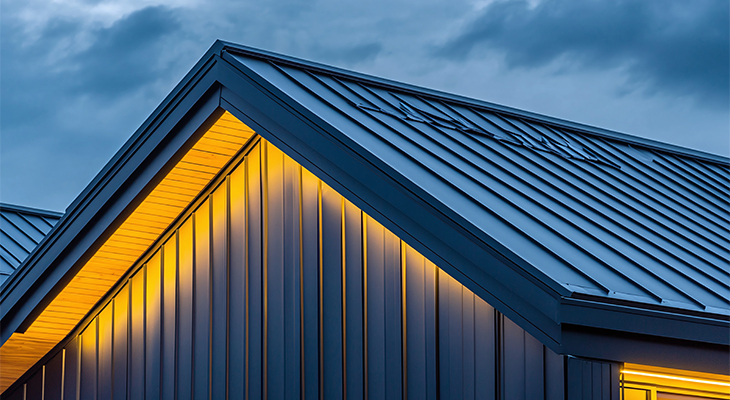
Metal roofing panels create uninterrupted roof surfaces. Standing seam systems eliminate irregular breaks and visible overlaps.
Clean roof lines support contemporary architecture and refined residential designs. They also enhance professional appearance on commercial buildings.
Residential roofs benefit from visual simplicity. Homes appear balanced and intentional when roof lines remain consistent.
Panel orientation reinforces architectural direction. Horizontal panels emphasize width. Vertical panels enhance height and rhythm.
Architects value these options because they support design clarity without added complexity.
- Design Flexibility Across Building Styles
Modern metal roofing panels adapt to diverse architectural styles. Minimalist homes benefit from smooth profiles and subtle finishes.
Traditional residential designs use panels to preserve proportion while modernizing appearance. Commercial structures use panels to reinforce functional aesthetics.
Panel systems allow variation in profile, spacing, and finish. These adjustments occur without changing the core material.
This flexibility allows one roofing system to support many architectural expressions. Residential roofing and commercial roofing projects both benefit. Design teams gain freedom without sacrificing consistency.
- Proportional Scale and Visual Balance
Panel dimensions influence how roofs relate to building size. Wider panels reduce visual clutter on large roof surfaces.
Smaller structures benefit from controlled panel spacing. This prevents roofs from overpowering walls and openings.
Architects use panel layout to manage scale intentionally. Consistent spacing supports visual harmony across elevations.
Complex roof geometries benefit from panel-based systems. Panels maintain alignment across valleys, slopes, and transitions. Balanced scale strengthens architectural integrity on residential roofs and commercial roofs alike.
- Integration With Modern Building Materials
Modern architecture relies on thoughtful material integration to achieve visual cohesion. Designers often combine glass, steel, concrete, and wood within a single building envelope.
Metal roofing panels integrate cleanly with metal siding and sheet metal roofing components. This compatibility supports seamless transitions between roof and wall materials.
Effective building envelope coordination also improves overall performance. Building envelope improvements can significantly reduce heating and cooling demand.
Commercial projects often pair metal roofing panels with curtain walls or concrete facades. Residential designs commonly combine panels with wood accents and masonry details.
Successful integration depends on precise detailing and installation. Experienced metal roofing installers in Edmonton help ensure materials align correctly and support the intended architectural outcome.
- Long-Term Aesthetic Consistency
Architectural value depends on longevity. Buildings must retain visual quality long after construction. Metal roofing panels maintain a uniform appearance over time. Segmented roofing materials often age unevenly.
Consistent roof appearance protects architectural intent. This matters for residential roofing and commercial properties.
Property owners benefit from roofs that preserve original design character. Architects prefer materials that age predictably. Metal roofing panels support long-term visual stability.
- Architectural Precision Through Professional Installation
Architectural precision depends on execution. Panel alignment directly affects visual outcome. Professional installation ensures consistent spacing and straight lines. This preserves clean roof geometry.
Fastening accuracy influences both appearance and performance. Skilled installers maintain architectural integrity.
Complex roof designs demand technical expertise. Proper installation ensures design intent becomes reality. Architects rely on experienced metal roofing contractors to achieve these results.
Architectural Planning Considerations Before Selecting Metal Roofing Panels
- Roof slope determines which metal roofing panel profiles perform correctly and maintain intended architectural proportions.
- Drainage design affects panel layout and spacing, helping prevent visual disruption across roof surfaces.
- Panel finish selection must align with wall materials to support cohesive architectural design.
- Roof coatings and protective finishes must suit site conditions to preserve long-term appearance.
- Early collaboration between designers and installers improves execution and reduces costly revisions.
Why Architects and Property Owners Specify Panel-Based Metal Roofing Systems
Panel-based systems support architectural clarity. They reduce visual noise and enhance proportional control.
These systems suit residential metal roofing and commercial metal roofing applications. They scale effectively across building types. Architects increasingly specify panels early in design. This avoids compromise later.
Property owners benefit from roofs that align aesthetics with durability. Panel-based systems deliver both. Metal roofing panels now define modern architectural roofing solutions.
Conclusion
Modern metal roofing panels offer architectural advantages beyond protection. They shape form, scale, and material harmony. Architects value panels for design clarity and flexibility. Property owners benefit from long-term visual consistency.
Projects that plan metal roofing early achieve stronger outcomes. Professional installation protects architectural intent. Panel-based metal roofing systems continue to define modern residential and commercial architecture.
About Us
Stahl Roof Systems is a specialized metal roofing contractor serving Edmonton and surrounding Alberta communities. The company focuses on residential, commercial, and industrial metal roofing systems with architectural precision.
For project planning and consultation, contact us to speak with experienced metal roofing professionals.