Maximize Your Metal Roof Efficiency with Ridge Vents for Better Ventilation
May 22, 2026
Metal roofing systems are built for durability and long-term performance. However, efficiency depends on more than just the panels you install. Ventilation plays a critical role in how your roof performs every day.
Without proper airflow, even the best roofing systems can underperform. Heat buildup, trapped moisture, and uneven temperatures all reduce efficiency. That is why ridge vents are often included in professionally designed systems. If you are considering professional metal roof installation services, understanding ventilation will help you make a better long-term decision.
What Are Ridge Vents in Metal Roofing Systems?
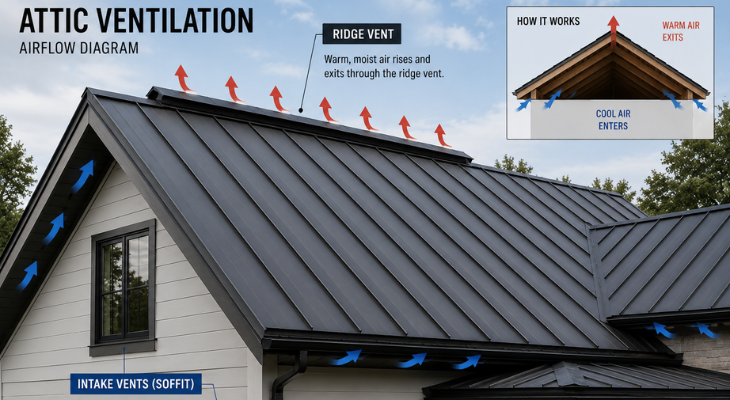
Ridge vents are installed along the highest point of your roof. They allow warm air to escape naturally from the attic or roof cavity. This creates a continuous airflow system when combined with intake vents at the lower edges.
In metal roofing, ridge vents are designed to match the roof profile. They sit neatly along the ridge line and remain almost invisible from a distance. More importantly, they maintain consistent airflow across the entire roof surface.
Unlike isolated vent systems, ridge vents provide balanced ventilation. This prevents hot and cold spots from forming under the roof. It also ensures that airflow is not limited to one section of the structure.
Why Ventilation Is Critical for Metal Roof Efficiency
Metal roofs can absorb and transfer heat quickly. Without ventilation, this heat becomes trapped inside the roof structure. Over time, this increases indoor temperatures and places strain on cooling systems.
Poor ventilation also leads to moisture problems. Warm air carries moisture that can condense on cooler metal surfaces. This creates damp conditions that affect insulation and structural components.
The Government of Canada highlights that ventilation helps control moisture levels and improve indoor air quality. This directly applies to roofing systems where airflow must be carefully managed.
In addition, poor airflow can reduce the effectiveness of insulation. When insulation becomes damp, it loses its ability to regulate temperature. This results in higher energy use and reduced comfort.
How Ridge Vents Improve Metal Roof Performance
Continuous Airflow Across the Roofline
Ridge vents work with natural air movement. Warm air rises and exits through the ridge. Cooler air enters from the eaves. This creates a steady cycle that keeps air moving at all times.
This continuous airflow prevents heat from accumulating in one area. It also ensures that the entire roof system benefits from proper ventilation.
Temperature Regulation in All Seasons
During summer, ridge vents release hot air before it builds up. This keeps attic temperatures lower and reduces cooling demand. In winter, they help maintain balanced temperatures across the roof surface.
Balanced temperatures reduce stress on metal panels. This prevents unnecessary expansion and contraction that can weaken the system over time.
Moisture Control and Condensation Prevention
Condensation is a common issue in poorly ventilated roofs. Ridge vents allow moist air to escape before it condenses. This protects insulation, wood framing, and other structural components.
Extended Lifespan of Metal Roofing Systems
When heat and moisture are controlled, roofing materials last longer. Metal panels remain stable and experience less wear. Fasteners and seals also maintain their integrity for longer periods.
Key Benefits of Ridge Vents for Metal Roofing
- Improve overall roof efficiency by supporting consistent airflow
- Reduce the need for excessive heating and cooling
- Lower energy consumption and operational costs
- Help maintain stable indoor temperatures
- Improve comfort in residential and commercial spaces
- Reduce strain on HVAC systems over time
- Lead to fewer repairs and lower maintenance needs
- Prevent moisture buildup within the roof structure
- Protect insulation from damage
- Preserve the strength of framing and structural components
- Support long-term durability of the entire building
Signs Your Metal Roof Needs Better Ventilation
Many property owners notice issues without realizing that ventilation is the cause. High attic temperatures are often the first sign. Rooms near the roof may feel warmer than the rest of the building.
Condensation under metal panels is another warning sign. You may also notice increased energy bills without a clear reason. Uneven heating or cooling across floors can indicate airflow problems.
The Government of Canada states that excess moisture in buildings can lead to mould growth and structural damage. This reinforces the importance of proper ventilation in roofing systems.
In colder climates, ice buildup along roof edges may also signal poor ventilation. This occurs when heat escapes unevenly and melts snow in certain areas.
Ridge Vents vs Other Ventilation Options
Ridge Vents vs Box Vents
Box vents are installed in specific locations. They provide limited airflow and may not cover the entire roof. Ridge vents, on the other hand, run along the full ridge line. This allows continuous ventilation across the structure.
Ridge Vents vs Turbine Vents
Turbine vents depend on wind to function. When wind conditions are low, their performance drops. Ridge vents operate passively and consistently without relying on external forces.
Why Ridge Vents Work Best with Metal Roofing
Metal roofing systems benefit from uniform airflow. Ridge vents provide this consistency. They integrate smoothly with standing seam panels and other metal profiles.
This makes them a reliable choice for maintaining efficiency in modern roofing systems.
Professional Installation and Ventilation Matters
Proper installation is essential for ridge vents to work effectively. Incorrect placement can disrupt airflow and reduce efficiency. Poor sealing can also lead to leaks and other issues.
Experienced contractors design ventilation systems as part of the overall roofing plan. They ensure intake and exhaust vents are balanced. This creates optimal airflow throughout the structure.
If you are planning a roofing upgrade, working with experienced metal roofing contractors in Edmonton ensures your system performs as intended.
How Ridge Vents Fit into Modern Metal Roofing Systems
Modern roofing systems are designed for performance and efficiency. Ridge vents play a key role in this approach. They work alongside insulation and structural components to create a complete system.
Standing seam metal roofs, in particular, benefit from ridge vent integration. Their design allows for seamless airflow without compromising appearance.
When all components work together, the result is a durable and efficient roofing system that performs consistently in all conditions.
Maintenance Tips for Ridge Vents and Metal Roofs
Ridge vents require minimal maintenance when installed properly. However, regular inspections help maintain performance. Debris such as leaves or dust should be cleared to prevent blockages.
Roof inspections should also check seals and flashing. Any damage should be addressed quickly to avoid larger issues. Maintaining proper airflow ensures the system continues to function efficiently.
Regular inspection and maintenance improve building durability. This highlights the importance of ongoing roof care.
Common Mistakes to Avoid with Ridge Vent Installation
Blocking intake vents is one of the most common mistakes. Without proper intake, airflow cannot circulate effectively. Incorrect sizing is another issue that limits performance.
Using incompatible materials can reduce efficiency and lead to premature wear. Ignoring the balance between intake and exhaust vents also creates problems.
Proper system design ensures ridge vents deliver maximum benefits. This requires experience and attention to detail during installation.
Conclusion
Metal roofing efficiency depends on proper system design. Ridge vents play a key role in maintaining airflow, controlling moisture, and regulating temperature.
When installed correctly, they improve performance and extend the life of your roof. Investing in proper ventilation ensures your metal roofing system delivers consistent results for years to come.
About Us
At Stahl Roof Systems, we focus on delivering high-performance metal roofing solutions across Edmonton. Our team understands how ventilation, materials, and installation work together to create reliable roofing systems.
We design every project with long-term performance in mind. This includes proper airflow, structural integrity, and efficient system integration. Our experience allows us to deliver roofing solutions that perform in demanding conditions.
If you are planning a roofing project, contact us to connect with our team and discuss your requirements.